
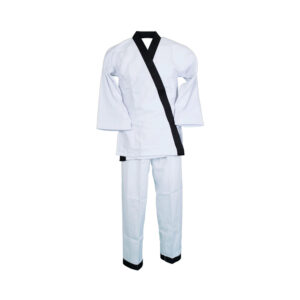
Hapkido Uniform
A Hapkido uniform, also called a Dobok, is specially designed for comfort, flexibility, and durability. It is usually made of strong cotton or a cotton-poly blend to handle intense training and grappling. The jacket is often a wrap-around or pullover style, paired with loose-fitting pants secured by a drawstring or elastic waistband. Hapkido uniforms are mostly white, but some schools also use black or colored uniforms to represent rank or tradition. A colored belt is worn around the waist to show the student’s level of expertise. The design allows free movement for kicks, joint locks, and throws, making it practical for martial arts practice. Simple yet strong stitching ensures it lasts through tough training sessions.
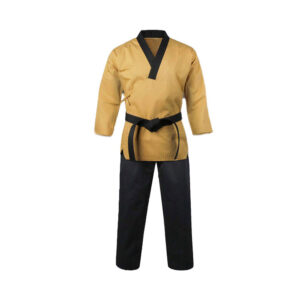
Hapkido Uniform
A Hapkido uniform, also called a Dobok, is specially designed for comfort, flexibility, and durability. It is usually made of strong cotton or a cotton-poly blend to handle intense training and grappling. The jacket is often a wrap-around or pullover style, paired with loose-fitting pants secured by a drawstring or elastic waistband. Hapkido uniforms are mostly white, but some schools also use black or colored uniforms to represent rank or tradition. A colored belt is worn around the waist to show the student’s level of expertise. The design allows free movement for kicks, joint locks, and throws, making it practical for martial arts practice. Simple yet strong stitching ensures it lasts through tough training sessions.
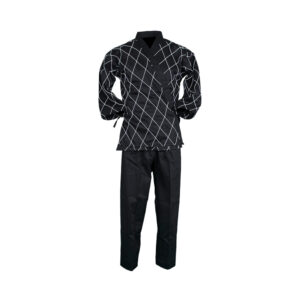
Hapkido Uniform
A Hapkido uniform, also called a Dobok, is specially designed for comfort, flexibility, and durability. It is usually made of strong cotton or a cotton-poly blend to handle intense training and grappling. The jacket is often a wrap-around or pullover style, paired with loose-fitting pants secured by a drawstring or elastic waistband. Hapkido uniforms are mostly white, but some schools also use black or colored uniforms to represent rank or tradition. A colored belt is worn around the waist to show the student’s level of expertise. The design allows free movement for kicks, joint locks, and throws, making it practical for martial arts practice. Simple yet strong stitching ensures it lasts through tough training sessions.
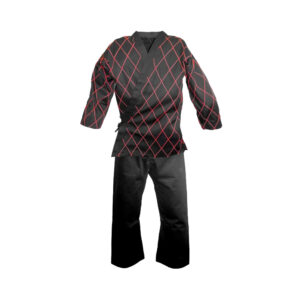
Hapkido Uniform
A Hapkido uniform, also called a Dobok, is specially designed for comfort, flexibility, and durability. It is usually made of strong cotton or a cotton-poly blend to handle intense training and grappling. The jacket is often a wrap-around or pullover style, paired with loose-fitting pants secured by a drawstring or elastic waistband. Hapkido uniforms are mostly white, but some schools also use black or colored uniforms to represent rank or tradition. A colored belt is worn around the waist to show the student’s level of expertise. The design allows free movement for kicks, joint locks, and throws, making it practical for martial arts practice. Simple yet strong stitching ensures it lasts through tough training sessions.
Hapkido Uniform
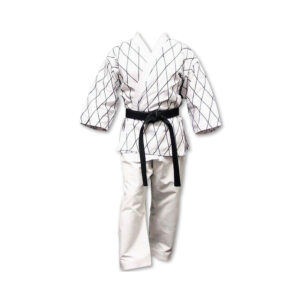
A Hapkido uniform, also called a Dobok, is specially designed for comfort, flexibility, and durability. It is usually made of strong cotton or a cotton-poly blend to handle intense training and grappling. The jacket is often a wrap-around or pullover style, paired with loose-fitting pants secured by a drawstring or elastic waistband. Hapkido uniforms are mostly white, but some schools also use black or colored uniforms to represent rank or tradition. A colored belt is worn around the waist to show the student’s level of expertise. The design allows free movement for kicks, joint locks, and throws, making it practical for martial arts practice. Simple yet strong stitching ensures it lasts through tough training sessions.
Hapkido Uniform
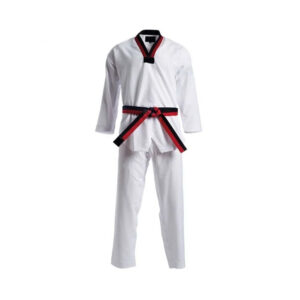
A Hapkido uniform, also called a Dobok, is specially designed for comfort, flexibility, and durability. It is usually made of strong cotton or a cotton-poly blend to handle intense training and grappling. The jacket is often a wrap-around or pullover style, paired with loose-fitting pants secured by a drawstring or elastic waistband. Hapkido uniforms are mostly white, but some schools also use black or colored uniforms to represent rank or tradition. A colored belt is worn around the waist to show the student’s level of expertise. The design allows free movement for kicks, joint locks, and throws, making it practical for martial arts practice. Simple yet strong stitching ensures it lasts through tough training sessions.
Hapkido Uniform
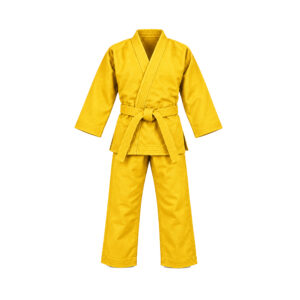
A Hapkido uniform, also called a Dobok, is specially designed for comfort, flexibility, and durability. It is usually made of strong cotton or a cotton-poly blend to handle intense training and grappling. The jacket is often a wrap-around or pullover style, paired with loose-fitting pants secured by a drawstring or elastic waistband. Hapkido uniforms are mostly white, but some schools also use black or colored uniforms to represent rank or tradition. A colored belt is worn around the waist to show the student’s level of expertise. The design allows free movement for kicks, joint locks, and throws, making it practical for martial arts practice. Simple yet strong stitching ensures it lasts through tough training sessions.
Hapkido Uniform
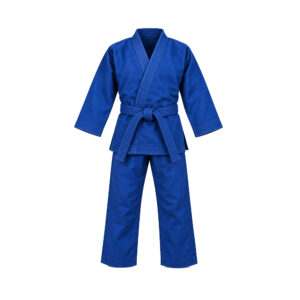
A Hapkido uniform, also called a Dobok, is specially designed for comfort, flexibility, and durability. It is usually made of strong cotton or a cotton-poly blend to handle intense training and grappling. The jacket is often a wrap-around or pullover style, paired with loose-fitting pants secured by a drawstring or elastic waistband. Hapkido uniforms are mostly white, but some schools also use black or colored uniforms to represent rank or tradition. A colored belt is worn around the waist to show the student’s level of expertise. The design allows free movement for kicks, joint locks, and throws, making it practical for martial arts practice. Simple yet strong stitching ensures it lasts through tough training sessions.
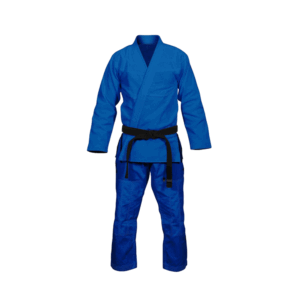
Jiu Jitsu GI Uniform
A Jiu-Jitsu Gi is the traditional uniform worn in Brazilian Jiu-Jitsu training and competition. It consists of a heavy cotton jacket, reinforced pants, and a belt that indicates the practitioner’s rank. The fabric is durable to withstand grappling, pulling, and intense training. The jacket has a strong collar for grips, while the pants often feature reinforced knees for extra strength. The Gi comes in standard colors like white, blue, or black, depending on competition rules. Designed for both comfort and toughness, the Jiu-Jitsu Gi allows practitioners to train safely and perform techniques effectively.
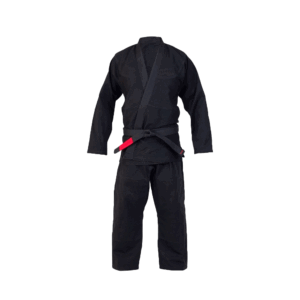
Jiu Jitsu GI Uniform
A Jiu-Jitsu Gi is the traditional uniform worn in Brazilian Jiu-Jitsu training and competition. It consists of a heavy cotton jacket, reinforced pants, and a belt that indicates the practitioner’s rank. The fabric is durable to withstand grappling, pulling, and intense training. The jacket has a strong collar for grips, while the pants often feature reinforced knees for extra strength. The Gi comes in standard colors like white, blue, or black, depending on competition rules. Designed for both comfort and toughness, the Jiu-Jitsu Gi allows practitioners to train safely and perform techniques effectively.
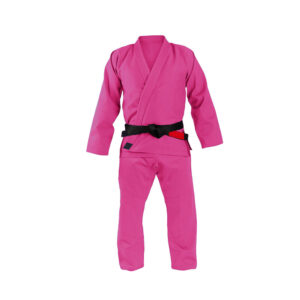
Jiu Jitsu GI Uniform
A Jiu-Jitsu Gi is the traditional uniform worn in Brazilian Jiu-Jitsu training and competition. It consists of a heavy cotton jacket, reinforced pants, and a belt that indicates the practitioner’s rank. The fabric is durable to withstand grappling, pulling, and intense training. The jacket has a strong collar for grips, while the pants often feature reinforced knees for extra strength. The Gi comes in standard colors like white, blue, or black, depending on competition rules. Designed for both comfort and toughness, the Jiu-Jitsu Gi allows practitioners to train safely and perform techniques effectively.
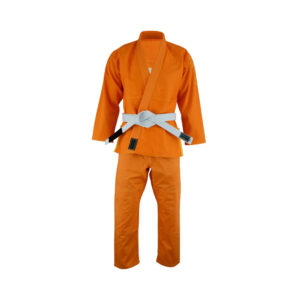
Jiu Jitsu GI Uniform
A Jiu-Jitsu Gi is the traditional uniform worn in Brazilian Jiu-Jitsu training and competition. It consists of a heavy cotton jacket, reinforced pants, and a belt that indicates the practitioner’s rank. The fabric is durable to withstand grappling, pulling, and intense training. The jacket has a strong collar for grips, while the pants often feature reinforced knees for extra strength. The Gi comes in standard colors like white, blue, or black, depending on competition rules. Designed for both comfort and toughness, the Jiu-Jitsu Gi allows practitioners to train safely and perform techniques effectively.